
Community Updates: Honoring a Life of Service, Welcoming New Paramedics, and Clarifying the Mobile Food Unit Ordinance
Chairman Blount’s Newsletter 3-15-26

Remembering Lieutenant Taylor Graham
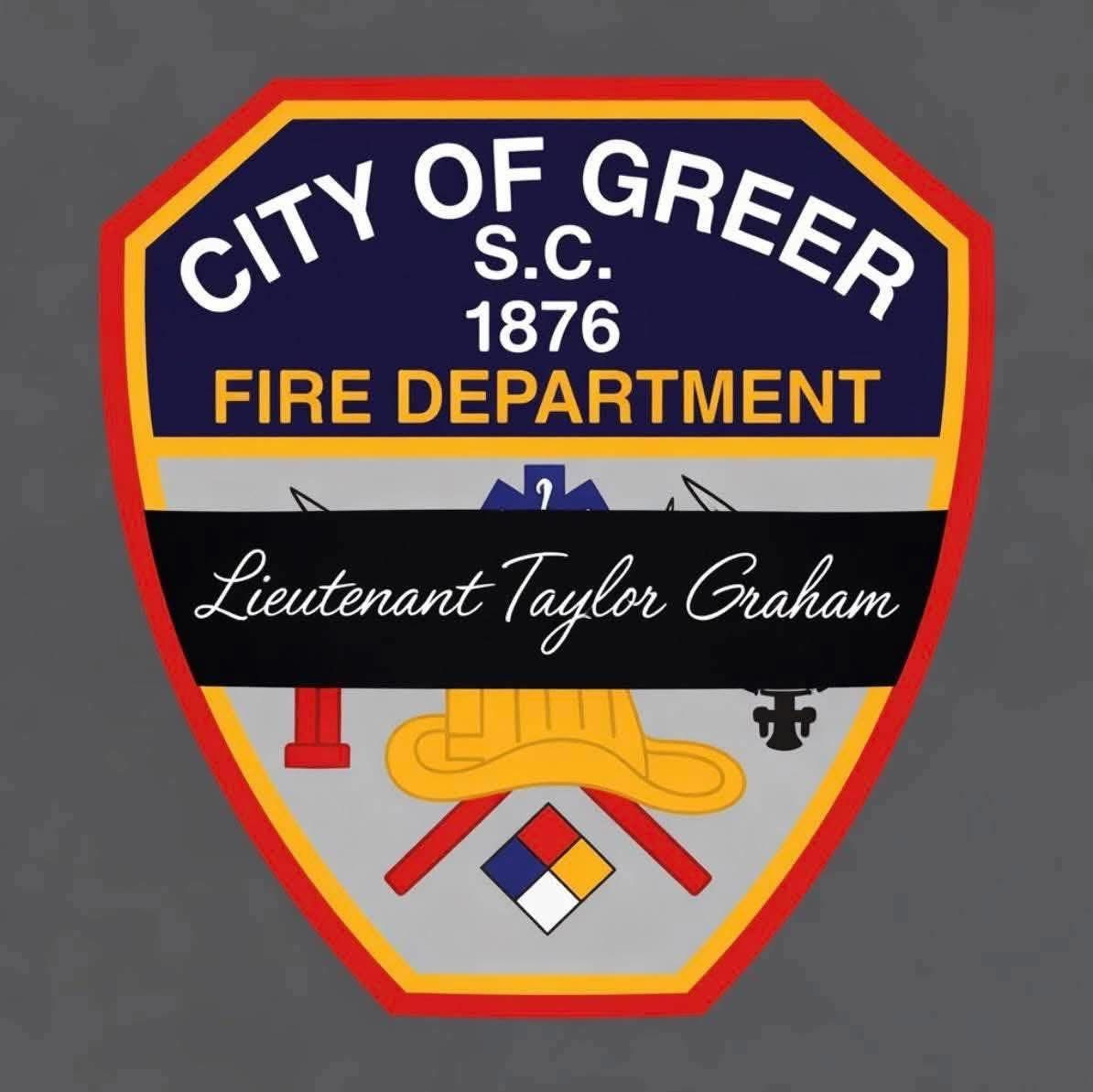
This week our community lost someone who meant a great deal to many of us in very different ways.
Lieutenant Taylor Graham spent more than two decades serving the City of Greer as a firefighter, answering calls and protecting families across our community. But long before I ever held public office, I knew Taylor in another role, as a fellow musician in the Greenville County music scene. In a way not many people experience, Taylor and I shared a bond as two people who lived in both worlds: public service and music.
After a courageous battle with cancer, Taylor has answered his final call. But the impact he made across our community will continue to be felt for a long time.
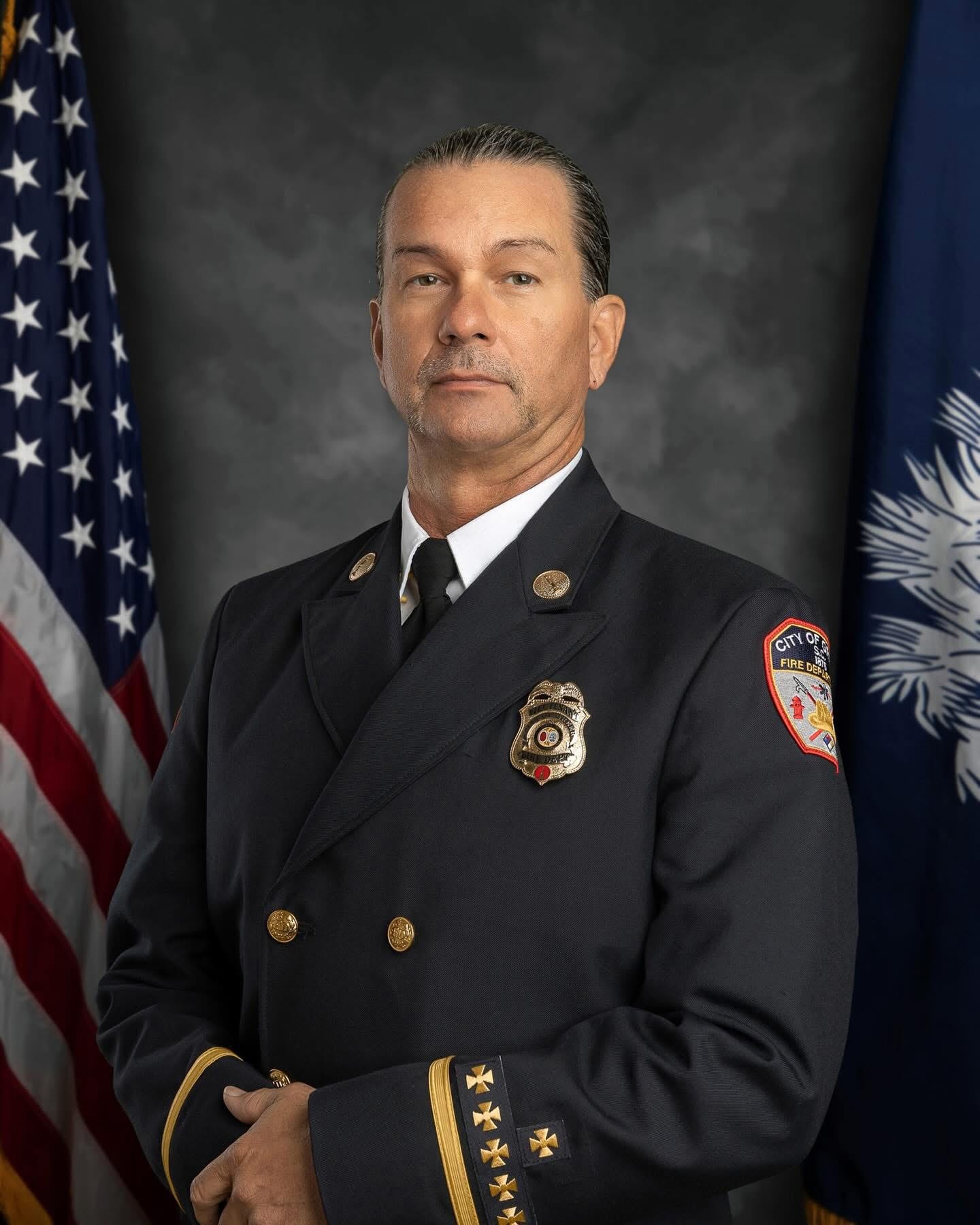
Taylor faithfully served the City of Greer Fire Department for 22 years, eventually rising to the rank of Lieutenant. For more than two decades he stood alongside his fellow firefighters protecting the Greer community, doing the kind of work that often goes unseen but is deeply felt by the people whose lives are touched by it. Those who served with him describe someone who embodied what the fire service is all about: dependable, selfless, and always willing to help others.
But many of us also knew Taylor through another passion….music!
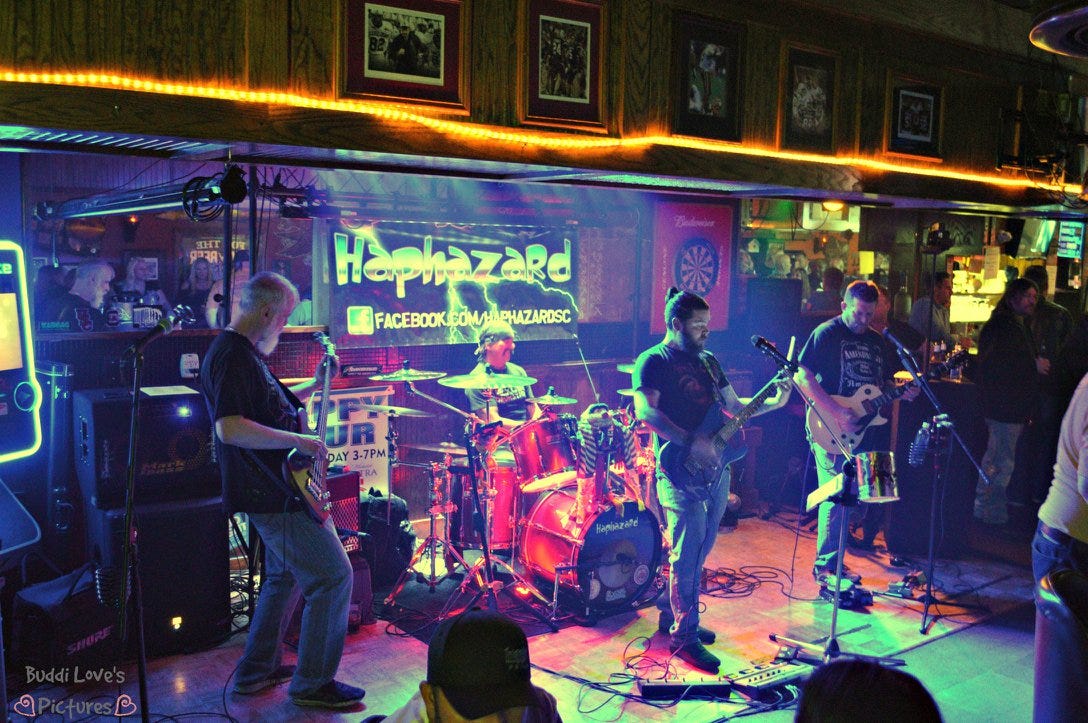
Truthfully, I can’t even remember the first place I met Taylor. We were usually passing each other during load in’s, load out’s, or while we were in the same space supporting other local artists.
That’s the nature of the Greenville music scene. If you’re around it long enough, you start seeing the same faces everywhere. It could have been the Harley-Davidson dealership during one of the many charity events, or maybe The Handlebar, The Barn, or any number of other local venues where musicians crossed paths week after week.
That’s how the local music community works. You run into the same people loading gear in parking lots, sharing stages, or catching each other’s sets between shows. Somewhere along the way those familiar faces become friendships.
Taylor was one of those people you just kept running into, in the best possible way.
He was part of the local band Haphazard, and like many musicians in the Upstate, he loved the camaraderie that comes with the music community. It’s a brotherhood of its own, built on late nights, shared stages, and supporting one another along the way.
In many ways, the worlds of music and firefighting require the same kind of person.
Both depend on teamwork.
Both require trust.
Both are built on showing up when people need you.
Taylor did that in both worlds.
He showed up for his fellow firefighters.
He showed up for the local music community.
And most importantly, he showed up for his family and the people who loved him.

In a community like ours, people often wear more than one hat. Some serve in uniform. Some serve through music, mentorship, or simply by showing up for the people around them.
Taylor Graham did all of those things.
My thoughts and prayers are with Taylor’s family, his brothers and sisters in the fire service, and the many friends he made through the Greenville music scene.
If you would like to support Taylor’s family during this time, friends have organized a fundraiser to help with medical and family expenses:
Greenville County is stronger because people like Taylor chose to invest their lives here, protecting their neighbors, sharing their talents, and building friendships that stretched far beyond the firehouse or the stage.
Rest easy, Lieutenant. Your watch is over.
Now you can finally sit down behind that heavenly drum kit, enjoy the music, and play the songs you love, knowing you gave everything you had in this life to protect and care for the people who meant the most to you.

We’ll be listening.
This Week in Greenville County Government
Meetings you can watch live this week
What to Watch This Week
A few discussions this week touch on issues that affect both long-term planning and day-to-day quality of life in Greenville County.
Radon Mitigation & Building Codes
The Roads, Infrastructure & Public Works Committee will review a code compliance request related to radon mitigation requirements in construction. Radon is a naturally occurring gas that can pose health risks, so this discussion focuses on how building code standards and enforcement should continue moving forward.
Council Priorities Discussion
During the Committee of the Whole, council members will step back from the normal agenda to discuss priorities and strategic focus areas for upcoming policy work.
Zoning Public Hearing
Council will also hold a Zoning Public Hearing, where residents can speak directly to council about proposed zoning requests that may impact development and land use across the county.
Council & Standing Committee Meetings
Zoning Public Hearing
Monday, March 16 – 6:00 PM
Council Chambers
Roads, Infrastructure & Public Works Committee
Tuesday, March 17 – 4:30 PM
Committee Meeting Room
Committee of the Whole
Tuesday, March 17 – 5:00 PM
Committee Meeting Room
Greenville County Council Meeting
Tuesday, March 17 – 6:00 PM
Council Chambers
Welcoming 13 New Paramedics to Greenville County
One of the privileges of serving as Chairman of Greenville County Council is getting to represent the citizens of our county at important moments in the lives of the people who serve our community. Last week I had the opportunity to take part in one of those moments that I will not soon forget.
Acadia River House, Greenville County EMS celebrated the graduation of the Paramedic Class of 2026, the third class of paramedics trained through this program. Thirteen graduates completed more than a year of rigorous education, clinical rotations, and field training to earn their paramedic certification.
As Chairman, I had the honor of delivering the keynote address during the ceremony, and more importantly, the opportunity to stand there afterward and shake the hand of each graduate as they officially entered the profession.
These graduates have spent the last twelve months preparing for a job that most people never fully see. The classroom training, the simulation scenarios, the hospital clinical rotations, and the countless hours spent learning advanced life-saving skills all lead to one simple but powerful moment: when someone calls 911 and an ambulance arrives.
In that moment, the door opens and a professional steps out ready to help.
Now, that professional will be them.
In my remarks to the graduates and their families, I shared something that is important for all of us to remember. Paramedics are often the first medical professional a patient sees on the worst day of their life. They make critical decisions in seconds, and the trust our community places in them is enormous.
That’s why programs like Greenville County’s paramedic training initiative matter so much. By investing in the training and development of these professionals, our county strengthens the emergency response system that protects residents across Greenville County every day.
But programs like this don’t succeed because of buildings or equipment.
They succeed because of people.
The instructors who invest their time teaching the next generation.
The EMS leadership team that built the program.
The coworkers who supported these students through a demanding year.
And especially the families who stood beside them every step of the way.
Standing there and congratulating each graduate was an honor I appreciated more than they will ever know. These moments remind us that behind every ambulance, every emergency call, and every life saved is a person who chose to dedicate their life to helping others.
Please join me in congratulating the Greenville County EMS Paramedic Class of 2026:
Aiden Butler
Christian Carter
Bryan Davis
Liz Franco
Janell Hood
Kamiyiah Irby
Mason Johnson
Trevor Loudermilk
Jared Norton
Nick Phillips
Rebecca Seest
Amira Smith
Jack Spence
To each of you. THANK YOU for choosing a life of service. I wish you safety in the field, strength in difficult moments, and many years of meaningful work helping the people of Greenville County.
We are proud of you, and we are grateful for the work you are about to do.
Over the past several months I’ve received a number of questions from residents and business owners about the new Greenville County food truck ordinance and whether anything is being done yet.
The ordinance was approved by County Council in December 2025 to create clearer and more consistent rules for how mobile food units operate in the county. The goal was not to eliminate food trucks, but to address safety concerns and ensure a level playing field between mobile vendors and brick-and-mortar restaurants.
Where Things Stand Right Now
Since the ordinance was adopted, Greenville County has been in a transition and education period while vendors review the new requirements and make adjustments to their operations if needed.
During this time, county staff and fire officials have focused on communicating the rules and helping vendors understand what changes may be required to bring their setups into compliance.
Residents may still see operations that appear to be transitioning, but the expectation moving forward is that vendors operating in Greenville County will follow the new standards.
What Is No Longer Allowed
Under the ordinance, several practices that had become common are no longer permitted moving forward, including:
• Leaving food trucks or equipment set up overnight outside of permitted multi-day events
• Building permanent structures around a food truck
• Operating large tents without the proper permit
• Running generators too close to residential property
• Operating without proper fire inspection decals, health permits, or county approvals
How Citizens Can Report Concerns
If residents notice situations that appear to violate the ordinance, such as trucks leaving equipment set up overnight or operating without visible permits, those concerns can be reported to the Greenville County Code Enforcement, or the county’s Building Codes and Fire Safety offices
These reports help ensure the ordinance is applied consistently and fairly for everyone.
Of course, you can also reach out to me about any areas where you feel the ordinance is not being followed, and I will be happy to look into it!
Chairman’s Corner: Greenville Forward 2050
Part 2 - How Greenville County’s Planning System Began to Drift and Why It Matters
Part two of the Greenville Forward 2050 series exploring how Greenville County’s planning system works, and where it may need realignment.
A Moment at the Microphone
If you attend enough public meetings in Greenville County, you eventually see a moment that repeats itself.
A resident walks up to the microphone during public comment.
They’ve done their homework.
They’ve read the Comprehensive Plan.
They’ve looked at the maps.
And they ask a question that sounds something like this:
“If the Comprehensive Plan says this area should stay rural… how can this development be approved?”
It’s a fair question.
And you can usually hear the frustration behind it.
From their perspective, the county appears to be saying two different things at once.
The plan says one thing.
The development proposal shows another.
What many residents don’t realize is that this confusion often isn’t caused by a single project or a single decision.
More often, it comes from something deeper.
It comes from the way the planning system itself is structured.
Over time, the different parts of that system, the vision, the regulations, and the approval process, can slowly drift apart.
When that happens, even people working inside the system sometimes struggle to explain why certain outcomes occur.
Residents feel like the plan doesn’t matter.
Developers feel like they followed the rules but are still blamed.
Public meetings become more tense.
And everyone walks away wondering why the system seems harder to understand than it should be.
That question, why the system sometimes feels confusing, is what led me to start digging deeper.
Before We Go Further
This is one of the more detailed articles I’ve written since starting this newsletter.
And that’s intentional.
Growth, planning, and development in Greenville County involve multiple layers of state law, local ordinances, planning documents, and administrative processes that most residents rarely see explained together.
Over the past several years serving on County Council, I’ve spent a significant amount of time trying to better understand how those pieces interact.
What I’m sharing here is simply my attempt to connect those dots.
Some people will agree with my conclusions.
Others may disagree.
But my hope is that by laying the framework out clearly, we can start having a more productive conversation about how Greenville County plans for the future.
Catching Up on the Series
This article is Part 2 of the Greenville Forward 2050 series.
In the first installment, I introduced the idea that growth management isn’t about finding one perfect policy solution.
Instead, it’s about understanding the table of tools local governments use to guide growth.
Tools like:
• infrastructure planning
• concurrency
• impact fees
• urban growth boundaries
• transfer of development rights
• school capacity planning
Each tool addresses a different part of the growth challenge.
But before we debate which tools Greenville County should use, we first need to understand the system those tools operate inside.
Deep Dive Podcast: How Greenville County Planning Actually Works
For readers who prefer listening to the discussion, this week’s Greenville Forward 2050 deep dive podcast walks through the same ideas explored in this article.
In this episode, the hosts unpack how Greenville County’s planning framework is designed to operate under South Carolina law.
They begin with the 1994 Planning Enabling Act, then explain how the system is supposed to flow from:
• the Comprehensive Plan
• to zoning ordinances
• to land development regulations
• to the approval processes used by local governments
The conversation also explores why misunderstandings often arise when those pieces drift out of alignment, and how that drift can make growth decisions feel confusing to residents.
If you’d like to hear the discussion before diving into the written breakdown below, you can listen to the episode here.
🎧 Greenville Forward 2050 Deep Dive Podcast — Episode 2
“How Greenville County Planning Actually Works”
The Foundation of Planning Law in South Carolina
Local planning authority in South Carolina comes from the South Carolina Local Government Comprehensive Planning Enabling Act of 1994.
That law created a structure every county must follow.
The system works in layers.
First comes the Comprehensive Plan.
This is the community’s long-range vision.
It describes where growth should occur, where rural land should be preserved, and how infrastructure should evolve.
Second come the regulations that implement the plan.
These include:
• zoning ordinances
• land development regulations (LDRs)
Zoning determines what can be built.
LDRs determine how development must be built.
And under state law, these regulations must be in accordance with the Comprehensive Plan.
In other words:
The plan guides the law.
The law governs the decision.
When those layers stay aligned, the system works well.
When they drift apart, confusion begins to grow.
The Zoning Gap
One of the most unusual features of Greenville County’s planning system is that large portions of the county remain unzoned.
In those areas, development is governed primarily through Land Development Regulations rather than land-use zoning.
This has both advantages and disadvantages.
Many residents in the northern and southern parts of the county strongly oppose zoning.
I understand that concern.
Zoning can feel like government overreach, especially in rural communities that value flexibility and property rights.
At the same time, the absence of zoning also limits the tools counties have to guide development.
Without zoning, the county cannot easily regulate:
• land use
• density
• development patterns
That means residents sometimes want the county to stop or modify development proposals in ways the law simply doesn’t allow.
This tension is one reason growth debates can become so heated.
Residents want protection for rural character.
But the legal tools needed to enforce those protections often don’t exist in unzoned areas.
Section 3.1 Was A Warning Light
Many residents first became aware of these structural issues during the debates surrounding Section 3.1 of the Land Development Regulations.
Section 3.1 was adopted in 2018 and later repealed by County Council in 2021 following legal challenges.
The ordinance attempted to give the Planning Commission authority to deny subdivision proposals in unzoned areas if they were incompatible with surrounding development patterns.
For many residents concerned about protecting rural character, the idea made sense.
But subdivision approvals operate under strict legal standards.
Those decisions generally must rely on clear regulatory criteria, not broad policy language.
Because those standards were not fully established in the Land Development Regulations, the ordinance faced legal challenges and was ultimately removed.
Looking back, Section 3.1 wasn’t necessarily the source of the problem.
It was the warning light that exposed it.
The concept behind the ordinance was trying to address a real concern.
But the regulatory framework needed to support it wasn’t fully developed.
As a result, when the provision was removed, several potential planning tools disappeared with it, including mechanisms that could have encouraged clustered development and open-space preservation.
The UDO Lesson
Several years later, Greenville County adopted a Unified Development Ordinance (UDO).
At the time, I opposed that adoption.
I wrote about those concerns in earlier newsletters, even though I struggled to fully articulate the structural issue I was seeing.
Once I began studying the planning framework more closely, I realized what I had been sensing.
The problem wasn’t the idea of a unified ordinance.
The problem was alignment.
If policy, zoning, and development regulations are already drifting apart, a unified ordinance doesn’t fix that.
It simply reorganizes the drift.
In many ways, it risks baking those inconsistencies deeper into the system.
After a new council took office and I became chairman, the UDO was reconsidered and ultimately taken off the table.
Before any unified code could be considered again, the underlying framework needs to be properly aligned.
A System That Evolved Faster Than Expected
It’s important to say something clearly here.
None of the structural issues described above were created by a single decision or a single group of people.
Greenville County’s planning framework has evolved over decades.
Elected officials, planning professionals, citizen advocates, and developers were all responding to the challenges facing the county at the time.
But Greenville County is now one of the fastest-growing areas in the Southeast.
When growth accelerates at that pace, systems that once worked well can begin to show strain.
Policies evolve.
Regulations accumulate.
Connections between documents become less clear.
This kind of institutional drift happens in growing communities across the country.
The real question isn’t how it happened.
The real question is whether we recognize it, and whether we are willing to realign the system so it works the way it was originally intended.
Why This Conversation Matters
Everything I’ve written here represents my own research and opinion.
I know some people, including council members, staff, commissioners, and long-time citizen advocates, will disagree with parts of my interpretation.
To them I would simply say this:
I disagreed with me too.
At least until I started looking closely at how these documents are supposed to operate together.
Once I connected the dots, I couldn’t unsee it.
Although I’ll admit I’m still working on explaining it clearly enough for everyone else to see what I’m seeing.
Which is exactly why I’m having this discussion publicly.
Because I’m not afraid of what it means if I’m wrong.
I’m far more concerned about what it means if I’m right, and we continue allowing the system to operate in a way that remains misunderstood, misinformed, and misaligned.
The next time a resident walks up to the microphone and asks:
“If the Comprehensive Plan says this area should stay rural, why is this development allowed?”
Greenville County should have a system that gives them a clear answer.
And if we don’t…
Then we still have work to do.
Probably quite a lot of it.
Next Week in Greenville Forward 2050
In the next installment, we’ll look at another layer of the planning system that often receives less attention:
“Community Plans”
Several communities in District 19 have already created detailed plans outlining how they want their areas to grow and develop.
Next week we’ll explore how those plans work, how they interact with the county’s broader planning framework, and why they may represent one of the most powerful tools communities have for preserving the character of the places they call home.
As always, I hope you and your families have a blessed and prosperous week in Greenville County!
I want to thank you for your dedication to our district and county. Also thank you for being transparent and putting Greenville county first. I just retired from working at the county and I know how much effort it takes to serve the public. Again thank you.
Benton, Well written description of how the planning system should work. It is the most sensible interpretation around. The challenge will be to bring it into action. It can be done but will require clarity, focus and a willingness to change perceptions.